Seven recurring arguments
The Debates Christians Keep Having (And Why They Don't End)
Observation window: 2026-09-25. A map of the recurring arguments — what each side actually claims, stated as they would state it. No winners declared.
How to read this
These debates recur because they sit on real, unresolved differences — of manuscripts, of authority, of emphasis. Each section steelmans both sides: the strongest version of each position, in the participants' own words where available. Heat levels reflect observed online engagement, not importance.
1. Bible translations
Observed heat highest heat online — online engagement, not importance
The divide: KJV-only advocates vs. readers of modern translations (NIV, ESV, NLT).
The KJV-only case, at its strongest: The King James is the preserved Word of God in English, translated from the Textus Receptus manuscript tradition; modern translations rest on different manuscripts and a different philosophy, and something is lost — or corrupted — in the exchange. "KJV is the only bible. Sorry" (Instagram, 2026-08-07). "no words in the bible are supposed to be changed" (Facebook, 2026-02-26). For many, it's also about continuity: four centuries of English-speaking Christianity read this Bible.
The modern-translation case, at its strongest: The KJV's language is a genuine barrier — "Cause ain't nobody got time for all that" (Facebook, 2026-02-26), on the archaisms — and newer translations use older, better manuscripts plus four centuries of scholarship. Accessibility is itself a value: "KJV I couldn't read or understand I went with NIV and listen it was a game changer" (Instagram, 2026-07-23). And the peacemaking refrain: "Best translation is the one you read consistently" (Instagram, 2026-08-07).
The neutral technical core: translations differ partly because they use different manuscript families. Verses familiar from the KJV that don't appear in some modern Bibles (e.g., Matthew 17:21) reflect manuscript differences, not a conspiracy — though online they're often framed as one ("When you find out there's verses missing in the newer translations," Facebook, 2026-02-26). Related flashpoint: The Passion Translation is attacked as "not a translation it's a personal interpretation paraphrased" (Facebook, 2026-07-11); its defenders would call it a heart-language rendering. And The Message gets similar treatment.
Why it doesn't end: it's really three debates stacked — manuscripts, readability, and authority — and participants keep answering different ones.
2. Catholic vs. Protestant
Observed heat high heat — online engagement, not importance
The divide: sola scriptura vs. Scripture-plus-Tradition; faith alone vs. faith expressed in sacraments and works; papal authority; Marian devotion; and the recurring "are Catholics Christian?"
The Protestant case, at its strongest: Scripture is the supreme authority; salvation is by grace through faith alone; practices like papal infallibility and Marian dogmas lack clear biblical warrant and developed over centuries. The sharpest version goes further: "Catholics believe works = salvation which is anti-Christ theology" (Instagram, 2026-05-22) — note: Catholics regard this as a strawman, addressed below.
The Catholic case, at its strongest: the Church predates the New Testament canon and, Catholics argue, produced it — "Church councils are the only reason you know what books belong in the bible" (Instagram, 2026-08-29). Salvation is by grace through faith, expressed in the sacraments and works of charity — not earned by works: "Catholics do not believe that good works earn your salvation" (Instagram, 2026-08-29). On authority, one confused commenter captured a real misconception: "we don't we follow the bible its a false fact that we follow the pope" (Instagram, 2026-07-02) — Catholics would say Scripture, Tradition, and the Magisterium work together, not the pope alone.
The Orthodox voice in the room: "Orthodox Christianity is the way" (Instagram, 2026-05-22) — convert enthusiasm for the tradition that claims continuity with the undivided early church and rejects both papal supremacy and Reformation innovations. And the anti-icon polemic gets aired too: "Yeah back to idolatry and bowing down to icons" (Instagram, 2026-08-27) — which Orthodox Christians answer with the 1,200-year-old veneration/worship distinction.
Why it doesn't end: the two sides start from different authorities, so evidence that convinces one side doesn't register for the other. The peacemaking refrain: "let's stop dividing and argueing about things that are not salvation issues" (Instagram, 2026-08-27).
3. Faith vs. works, and assurance of salvation
Observed heat high heat — online engagement, not importance
The divide: Is salvation by faith alone, with works as fruit — or does it require ongoing obedience? Once saved, always saved?
The "faith alone / eternal security" case: salvation is a gift received by faith; genuine faith necessarily changes a person, but works contribute nothing to earning it. "Believing on the Lord Jesus Christ and thou shalt be saved" (Facebook, 2026-08-03). The folk version of the works-as-evidence view: "real faith changes you not perfectly" (Instagram, 2026-08-28).
The "faith working through love / conditional" case: faith without works is dead (James 2); repentance is not a one-time opinion change — "Repentance is more than a change of opinion—it is a God-given turning" (Facebook, 2026-08-03). Catholics, Orthodox, Methodists, and others teach that salvation can be lost or must be worked out with perseverance.
Why it doesn't end: both sides quote Scripture; they differ on which passages govern the others.
4. Explaining the Trinity
Observed heat medium-high heat — online engagement, not importance
The divide: how to explain "one God, three persons" — and whether the explanations are heretical.
The most common folk explanation is the water analogy: "I often use the example of water. It can be liquid, solid or humidity" (Facebook, 2026-09-07). Theologians across traditions note this implies modalism (one God wearing three masks) — but it persists because it's intuitive. Skeptics push back at the doctrine itself: "Can you give me the scriptures where God says all three are one?" (Facebook, 2026-09-07). And non-Trinitarian claims circulate: "There is only one God the father. The son is not God" (Facebook, 2026-09-07) — a position the major traditions (Catholic, Orthodox, most Protestant) regard as outside historic Christianity, while groups like Jehovah's Witnesses and Oneness Pentecostals hold versions of it.
Why it doesn't end: the doctrine is genuinely paradoxical; every analogy breaks somewhere.
5. Worship style
Observed heat medium heat — online engagement, not importance
The divide: liturgical/traditional vs. contemporary worship.
Traditionalists value reverence, historical continuity, and the sense that worship isn't entertainment. Contemporaries value accessibility, emotional engagement, and reaching the unchurched. Inside Catholicism, restrictions on the traditional Latin Mass are their own flashpoint. This debate is mostly intra-tradition — it doesn't cross Catholic/Protestant lines so much as run within each.
6. Attendance decline, "deconstruction," and leaving
Observed heat medium-high heat — online engagement, not importance
The divide: institutional defenders vs. the exvangelical / "church hurt" / deconstruction narratives.
The data both sides cite: Gallup (March 2026 report on 2025 data): 57% of Americans seldom or never attend services; 31% weekly or nearly weekly. Ages 18–29: 61% seldom/never. Pew: the US Christian share fell from 78% (2007) to ~62% (2024) but has been "relatively stable" since ~2019. Gallup (April 2026): young men 18–29 saying religion is "very important" rose from 28% (2022–23) to 42% (2024–25) — the first time in 25 years they've surpassed young women. One side reads decline; the other reads a possible turn.
The leaving narratives: "I was SAVED FROM CATHOLICISM …. By Jesus" (Instagram, 2026-07-03) — the conversion-out genre. The deconstruction genre: re-examining inherited faith, sometimes rebuilding, sometimes exiting. Defenders respond that hurt by people isn't disproof of the faith, and that social-media deconstruction stories are a self-selected sample.
Why it doesn't end: it's biographical as much as theological — people's experiences differ, and no statistic settles an experience.
7. Canon and church history
Observed heat medium heat — online engagement, not importance
The divide: popular myths about how the Bible was assembled vs. the historical record.
The viral version: the Council of Nicaea (325) voted on which books go in the Bible, or Constantine removed books. The historical record: Nicaea addressed Christ's divinity, the date of Easter, and church discipline — no canon decree exists in its records (see hype audit). Canon formation was a centuries-long recognition process; Athanasius's 39th Festal Letter (367) is the first list of all 27 New Testament books; the Muratorian Fragment (~170) predates Nicaea by 150 years. Related: the deuterocanonical books — "Luther didn't remove them; he printed them in his 1534 Bible as useful but non-canonical" (Instagram, 2026-07-30).
Why it doesn't end: the myth is better story material than the history (The Da Vinci Code did the myth a lot of favors), and most people meet the myth first.
The recurring peacemakers
Across every debate, the same two refrains appear from the exhausted middle: "Best translation is the one you read consistently" and "let's stop dividing and argueing about things that are not salvation issues." They don't resolve anything — but they're the most-liked comments in the room.
Limitations
- Quotes are verbatim from English-language public reels and forums; Facebook Groups were inaccessible, and TikTok/YouTube comments were available only via snippets — the heat map may underweight non-English Christianity.
- "Steelmanning" summarizes positions as participants state them; theologians would add nuance to every section.
- Statistics: Gallup March 2026 (2025 data) and April 2026; Pew Religious Landscape data via factually.co (2025). See hype audit on the "revival" framing.
Source notes
- Debate heat levels and structure: the research behind this site.
- All quotes verbatim from public Instagram/Facebook reel comments and forum threads, with source URLs and dates.
- Gallup attendance: news.gallup.com/poll/702572 (March 2026, 2025 data). Gallup young men: news.gallup.com/poll/708410 (2026-04-16).
- Pew US landscape: via factually.co (2025).
- Nicaea fact-check: factually.co (retrieved 2026-09-25); corroborating video essay (youtube.com/watch?v=Q-xpYnCvim8).
- Image:
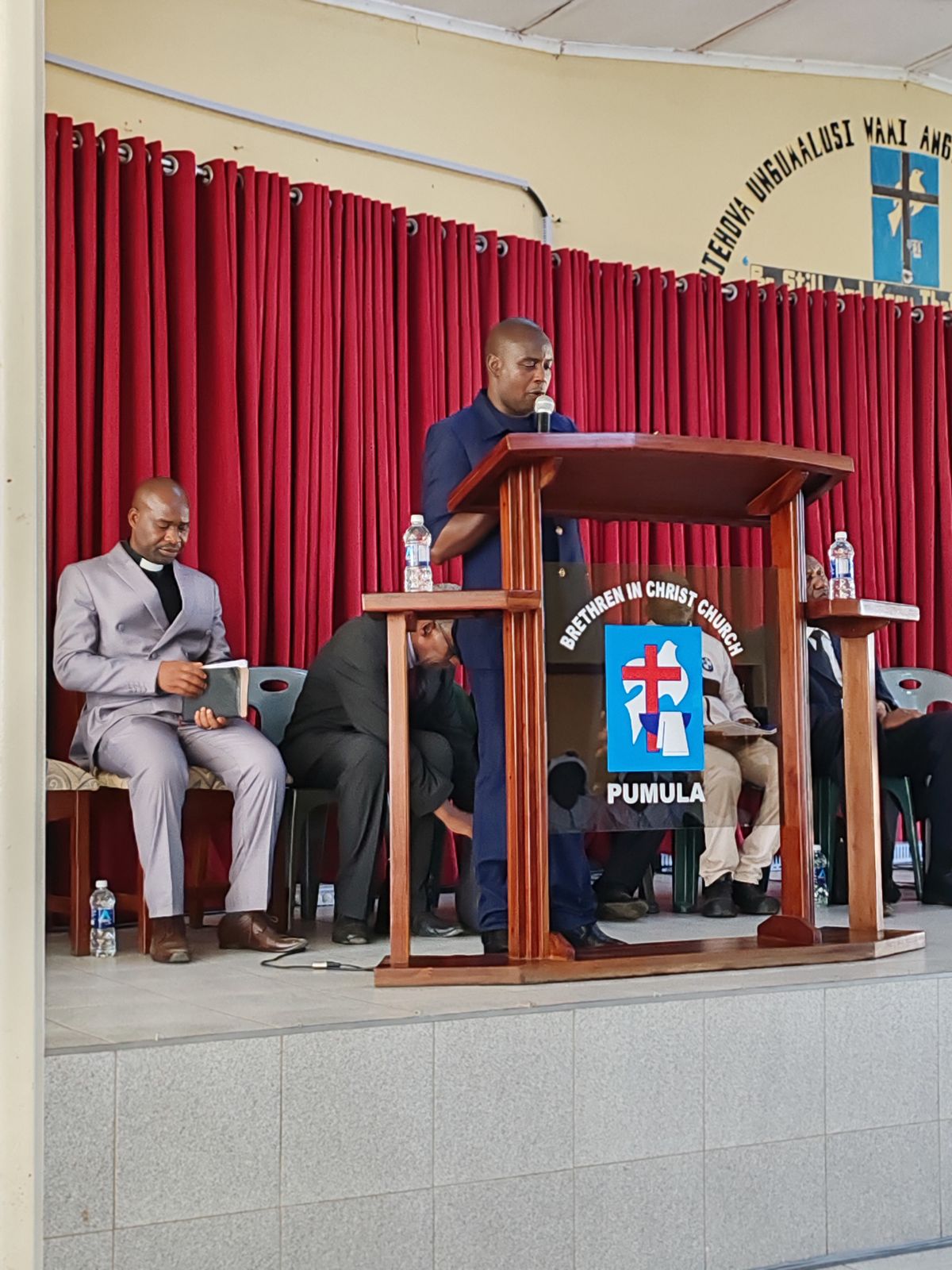
images/preaching.jpg— CC0 via Wikimedia Commons.