61 terms, plainly explained
The Jargon Decoder: 55 Christian Terms, Plainly Explained
Observation window: 2026-09-25. Terms observed confusing real beginners in forums, comment sections, and Q&A threads. Definitions are simplified and descriptive; traditions differ on several of these, and differences are flagged.
Core beliefs
- Gospel — literally "good news." Also the name for the four books about Jesus: Matthew, Mark, Luke, John.
- Grace — God's favor given freely, not earned. Central to nearly every tradition's account of salvation.
- Faith — trust in God and in Christ's work. What faith requires alongside it is one of Christianity's oldest arguments.
- Salvation — being rescued from sin and reconciled to God; the "end goal" of the Christian life as Christians describe it.
- Trinity — the teaching that God is one being in three persons: Father, Son, Holy Spirit. Distinct persons, one God — famously hard to explain (see the debates page for why the analogies keep failing).
- Incarnation — the teaching that God became human in Jesus.
- Resurrection — Jesus rising from the dead; for Christians, the central event of the faith.
- Atonement — how Christ's death reconciles humanity to God. How it works is debated (ransom, substitution, moral example — traditions emphasize different models).
- Repentance — turning away from sin toward God. One commenter's widely-liked formulation: "Repentance is more than a change of opinion—it is a God-given turning" (Facebook, 2026-08-03).
- Justification — being declared righteous before God. Protestants typically say this happens by faith alone; Catholics describe it as a process involving grace, faith, and works of charity.
- Sanctification — growing in holiness over time after conversion. Folk version: "real faith changes you not perfectly" (Instagram, 2026-08-28).
- Gospel (as message) — shorthand for the core Christian message about Jesus.
- Born again — experiencing spiritual rebirth/conversion; from Jesus' words in John 3. Used both theologically and as evangelical identity language ("are you born again?").
- Saved — evangelical shorthand for having received salvation. Non-evangelicals sometimes find the past-tense certainty of "I am saved" presumptuous; evangelicals find it biblical.
Worship and sacraments
- Sacrament — a sacred rite believed to convey grace (Catholic/Orthodox: seven; e.g., baptism, Eucharist, confirmation).
- Ordinance — what many Protestants call baptism and communion instead of "sacrament": commanded by Christ but understood as symbolic rather than grace-conveying. Same actions, different theology.
- Baptism — initiation by water. Infant baptism (Catholic, Orthodox, Lutheran, Presbyterian, Methodist, Anglican) vs. believer's baptism (Baptist, Anabaptist, Pentecostal, most non-denominational) — one of the sharpest practical divides.
- Eucharist / Communion / Lord's Supper — the bread-and-wine rite. Catholics and Orthodox believe Christ is truly present; most Protestants see it as symbolic or spiritual. Frequency ranges from daily (Catholic) to quarterly (some Baptists).
- Confirmation — a rite of mature affirmation of faith (Catholic/Orthodox/Anglican/Lutheran); in Orthodoxy it's called chrismation and happens at infancy.
- Confession / penance — confessing sins to a priest (Catholic/Orthodox) vs. confessing directly to God (most Protestant).
- Liturgy — a structured, traditional order of worship. "High church" = formal liturgy; "low church" = simpler services.
- Mass — the Catholic name for the Eucharistic service. Divine Liturgy is the Orthodox equivalent.
- Altar call — an evangelical invitation, usually after a sermon, to come forward to commit (or recommit) one's life to Christ.
- Testimony — a personal story of conversion or of God's work in one's life; a staple genre in evangelical culture.
- Tithe — giving a tenth of income to the church; practiced literally by some, treated as a principle by others.
- Doxology — a short hymn of praise to God (the most famous begins "Praise God, from whom all blessings flow").
- Benediction — a blessing pronounced at the end of a service.
Church life and structure
- Denomination — an organized Christian body with its own governance and theology (Baptists, Methodists, Presbyterians…). There are an estimated 44,900+ worldwide (CSGC, 2024 table).
- Non-denominational — independent churches, usually evangelical in theology, not affiliated with a denomination. One of the fastest-growing forms of church in the US.
- Parish — a local church community with defined boundaries (Catholic/Orthodox/Anglican usage).
- Diocese — a district of parishes under a bishop.
- Synod — a council or assembly of church leaders; also the governing body in some Lutheran and Presbyterian churches.
- Clergy / laity — ordained ministers vs. ordinary members. How much authority each holds varies enormously.
- Megachurch — a very large congregation (usually defined as 2,000+ weekly attendees), typically evangelical, with contemporary worship and multiple services.
- Fellowship — Christian community and shared life; also used as a synonym for a church gathering.
- Discipleship — learning to follow Jesus, usually through mentoring, study, and practice.
- Devotional / quiet time — personal daily prayer and Bible reading.
- Revival — a period of renewed religious fervor, sometimes with mass conversions.
- Exvangelical — someone who has left evangelical Christianity (often retaining some faith, often not). A large online identity and content genre.
- Deconstruction — re-examining (and often dismantling) one's inherited faith. For some it's a path to a rebuilt faith; for others, the exit.
- Church hurt — pain caused by a church or its leaders; a major theme in leaving-church narratives.
Bible and interpretation
- Canon — the official list of books in the Bible. Catholics have 73 books; Protestants 66; Orthodox slightly more. (No, the Council of Nicaea did not vote on it — see the hype audit.)
- Apocrypha / deuterocanonical — the extra Old Testament books in Catholic and Orthodox Bibles (Tobit, Maccabees, etc.). Protestants don't treat them as Scripture. One well-informed commenter noted: "Luther didn't remove them; he printed them in his 1534 Bible as useful but non-canonical" (Instagram, 2026-07-30).
- Exegesis — drawing meaning out of a biblical text (the careful method).
- Hermeneutics — the principles of interpretation; the "how to read" behind exegesis.
- Apologetics — reasoned defense of the faith.
- Eschatology — teachings about the end times / last things.
- KJV-only — the position that the King James Version is the only legitimate English Bible ("KJV is the only bible. Sorry," Instagram, 2026-08-07; "no words in the bible are supposed to be changed," Facebook, 2026-02-26).
- Textus Receptus — the Greek manuscript family behind the KJV. Modern translations mostly use older manuscripts; that difference is the technical core of the translation wars.
People and movements
- Evangelical — a broad movement emphasizing the Bible's authority, personal conversion ("born again" experience), and sharing the faith. Not a denomination.
- Mainline — the older, more liberal Protestant denominations (Episcopal, ELCA Lutheran, Presbyterian USA, United Methodist, etc.). The name distinguishes them from evangelicals.
- Pentecostal — emphasizing the Holy Spirit's gifts: speaking in tongues, prophecy, healing. Born in the early 20th century (Azusa Street, Los Angeles, 1906).
- Charismatic — Pentecostal-style gifts and worship within mainline, Catholic, or non-denominational churches.
- Theosis — the Orthodox teaching that salvation means growing into likeness of God ("becoming by grace what Christ is by nature," as the saying goes).
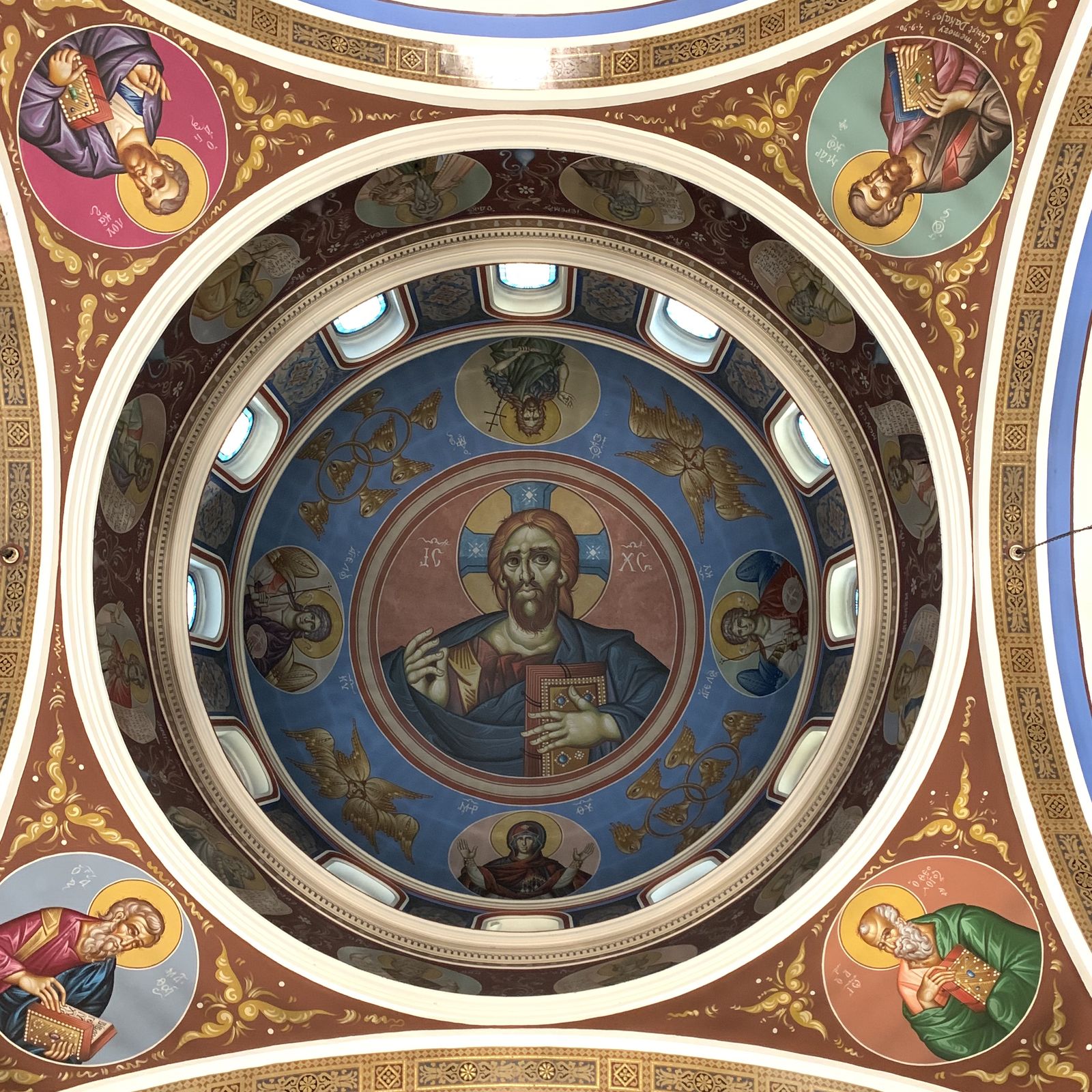
- Icon — a sacred image in Orthodox (and Catholic) tradition; venerated as a window to the divine, not worshipped as an object.
- Veneration vs. worship — the distinction Catholics and Orthodox insist on: veneration (honor) is given to Mary and saints; worship (latria) belongs to God alone. Critics dispute that the distinction holds in practice.
- Magisterium — the Catholic Church's teaching authority (pope + bishops).
- Ecumenical — worldwide/universal; also the movement for Christian unity. An ecumenical council is a church-wide council (e.g., Nicaea 325).
- Creed — a formal statement of belief. The Nicene Creed (325/381) and Apostles' Creed are the two most widely used.
- Catechism — a question-and-answer summary of doctrine used for teaching (the Catholic Catechism of the Catholic Church is the most famous).
One folk etymology to retire
- "Christians mean mini Christ" — this folk etymology circulates in comment sections ("Catholics are Christians because Christians mean mini Christ," Instagram, 2026-07-03). Neutrally: "Christian" comes from Greek christianos, "follower of Christ" — first used in Antioch in the 1st century. The "mini Christ" version is folk, not scholarly.
Limitations
- Definitions are simplified for beginners; every one of these terms has a technical literature behind it.
- Several terms (sacrament, justification, canon, veneration) are defined differently by different traditions — the dominant-definition-plus-flag format is deliberate.
- Terms were selected from observed beginner confusion (community evidence §E); long-tail tradition-specific terms (Orthodox fasting rules, Anabaptist distinctives) were bounded out per scope.
Source notes
- Terms observed in the wild: public comment threads and forum Q&A (2025–2026).
- Denomination count: CSGC "Status of Global Christianity 2024" table.
- Catechism definition: Vatican Catechism (vatican.va).
- WCC (oikoumene.org): Oriental Orthodox family background.
- Trinity-analogy note: the research behind this site, item 5.